MVP vs Full Product: What Entrepreneurs Get Wrong
Struggling to decide between building an MVP or full product? This guide debunks the three biggest misconceptions holding tech entrepreneurs back: MVP quality concerns, idea theft paranoia, and feature overload. Discover how billion-dollar companies like Airbnb, Dropbox, and Instagram actually started, plus a practical framework for choosing the right features to launch fast and learn faster.
Kobi Levi
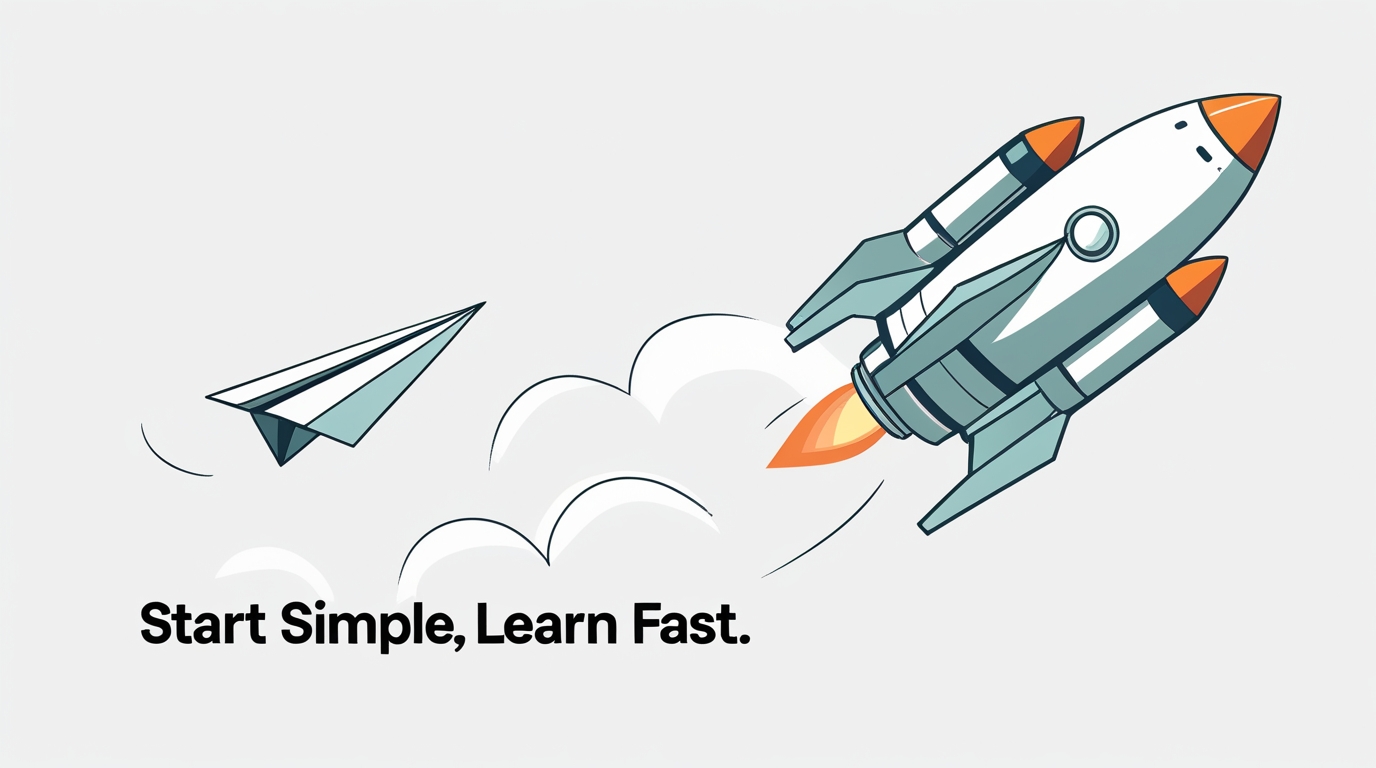
You've got this brilliant app idea. It's going to change everything. You can already see it—the sleek interface, the dozens of features, the five-star reviews flooding in. But here's where most first-time founders hit the brakes: Should I build everything at once, or start with an MVP?
If you're wrestling with this question right now, you're not alone. I've watched countless entrepreneurs agonize over the same decision, and honestly? Most of them get it wrong in surprisingly similar ways.
Let me share what I've learned from the trenches—and more importantly, what successful founders wish they'd known before writing their first line of code.
The Three Big Misconceptions (And Why They're Holding You Back)
Misconception #1: "MVP Means Low Quality"
Let's get this straight right now: A minimum viable product is NOT a half-baked, buggy mess.
I get why this confusion exists. The word "minimum" sounds like you're cutting corners, right? But here's the reality check from developers who've built hundreds of MVPs: minimum refers to features, not quality.
Your MVP needs to be technically excellent with a user experience that keeps people coming back. Think of it this way: Would you rather have two kick-ass features that users love, or a dozen mediocre features that confuse everyone?
Airbnb's first website was incredibly basic—just photos and descriptions of a room. But it worked flawlessly for what it promised: connecting people who needed affordable accommodation with people who had extra space. That simple site validated a real need and launched them toward their current $35 billion valuation.
The lesson? Quality over quantity, always. Your users will forgive a limited feature set way before they'll forgive a clunky, unreliable experience.
Misconception #2: "Someone Will Steal My Idea If I Share It"
Ah yes, the dreaded idea theft paranoia. If you're losing sleep over this, I have some tough love for you: Your idea probably isn't as unique as you think—and that's actually good news.
If no one else has had your idea before, it's probably not very good. Think about successful products—there was Blogger, then Twitter, then Tumblr. Facebook, then Instagram, then Pinterest. These are essentially the same ideas executed in very different ways.
Here's what really matters: Making a startup happen isn't easy. To execute on a big idea requires enormous investment of time, dedication, money, passion, people, and knowledge. Who would devote themselves to that extent to execute on someone else's idea?
Let me put it bluntly—ideas have no intrinsic value. What you create around your idea—the intellectual property, the execution, the relationships—that's what has value.
Plus, while someone copies your work, you continue to iterate. They're always playing catch-up while you're innovating based on real user feedback. You've got a massive head start just by being first to market and first to learn.
So stop hiding in the shadows. The more you talk about your idea, the closer to reality it gets. You need feedback, connections, and early adopters—and you can't get any of that if you're paranoid about sharing.
Misconception #3: "I Need to Figure Out Every Feature Before I Start"
This is the killer. The dream-crusher. The reason so many brilliant ideas never see daylight.
You're sitting there with a spreadsheet listing 47 features you think your app "needs." Social login. Push notifications. User profiles. Chat. Dark mode. Analytics dashboard. The list grows every day as you think of new "essentials."
Stop. Just... stop.
Some entrepreneurs concentrate on just two or three killer features, or even start with a minimum marketable feature. Excessive features directly influence MVP costs and stall your launch date.
Here's what the pros know: A reasonable timeframe for delivering an MVP is about 2-3 months. If your development estimate exceeds this, you need to give your schedule a second look and break down complex tasks.
But how do you know which features to include? Great question. Let's talk about that.
The Real Way to Choose Your MVP Features
Feature prioritization should be informed by feedback from your target market and guided by whatever problem you're trying to solve for them. It's that simple—and that hard.
The MoSCoW Framework (Your New Best Friend)
This method breaks features into four buckets:
Must-Haves: These are the key features that make your app viable. Without them, your app cannot function. For Instagram's early version (then called Burbn), this was photo sharing. That's it.
Should-Haves: Without should-haves, your MVP can work, but it's better not to leave them out. These smooth rough edges but aren't deal-breakers.
Could-Haves: Nice additions that set you apart but aren't necessary for launch.
Won't-Haves (for now): Features you're actively deciding to exclude from your MVP.
Here's a gut-check exercise: Ask yourself why you're building your MVP at least five times. When using the "5 Whys" method, be as specific as you can be and steer clear of industry jargon and buzzwords—they often cover up vague ideas.
Think Impact vs. Effort
The feature priority matrix evaluates Impact (the feature's value), Effort (resources needed), and Risk (probable challenges). High-impact, low-effort features are must-haves for your first version.
An MVP should typically include 3-5 core features that directly address your users' primary pain points. Remember, it's better to excel at a few essential features than to have many mediocre ones.
Stuck on your AI-built app, or chasing your first customers?
One team gets you unstuck, then gets you paying users.
How The Giants Actually Started (The Truth Will Surprise You)
Let me hit you with some reality checks about companies you probably assume launched "fully-featured":
Dropbox: A Video, Not A Product
Dropbox's MVP was extraordinarily simple—founder Drew Houston created a 3-minute explainer video demonstrating how the product would work before writing a single line of code. This simple approach helped the company save on development costs and test market interest simultaneously.
The results? Their beta sign-up list exploded from 5,000 to 75,000 overnight after posting the video. They validated massive demand before investing months in building.
The lesson: Test interest before building. Sometimes, you don't even need a working product to validate your idea.
Airbnb: Three Air Mattresses and a Dream
In 2007, Brian Chesky and Joe Gebbia needed rent money. They created a simple website with photos and descriptions of their San Francisco apartment and posted it on a conference forum. They received three bookings. That was their MVP—a basic site that validated demand and their value proposition.
Today? Airbnb offers listings in over 191 countries and has over 45.6 million adult users in the U.S. alone.
The lesson: Start small and solve a specific problem. By building and learning at the initial stages, Airbnb avoided what could have been a costly, feature-rich failure. It's better to fail fast and readjust than learn the same lesson after spending a lot of time and money.
Instagram: The Power of Subtraction
Here's one that'll blow your mind: Instagram initially launched as a photo and location check-in app called Burbn with multiple features. The founders quickly identified that users were far more interested in the photo-sharing feature than anything else. So they cut everything else.
The lesson: Sometimes the key to success is removing features, not adding them. Listen to what users actually use, not what they say they want.
The Real Questions You Should Be Asking
Instead of "Should I build an MVP or a full product?" ask yourself these:
What's the ONE problem I'm solving? Not five problems. One. Get crystal clear on this.
Who exactly am I solving it for? Some founders fail because they solve a problem for an overly specific or even non-existent audience, or they solve something other businesses have already successfully solved. Do your research.
What's the absolute simplest way to test if people will actually use this? The audience almost entirely drives feature selection. Thinking everything out in isolation, especially if you're not building the product for yourself, tends to produce huge mistakes.
Am I in love with my idea or with solving the problem? This is crucial. Many people fall in love with their idea so much that they continue despite red flags showing the problem isn't severe enough for their target market.
Your Action Plan (Starting Today)
Look, I know this might feel overwhelming. You came here probably hoping I'd give you a definitive answer: "Build an MVP!" or "Go full product!" But the truth is, the process matters more than the label.
Here's what to do right now:
Write down the ONE core problem you're solving in a single sentence. If you can't, you're not ready to build anything yet.
Talk to 10-20 potential users about this problem. You need to go out to your customer group and make sure the problem you're tackling exists and that people would be willing to pay for a solution.
Create a simple landing page explaining your solution. Before you write code, see if anyone signs up for updates. If your concept has no support right from the start, it's a vivid sign that you need to pivot.
Prototype before you build. Prototyping doesn't take much time or resources, yet it helps you save resources, mitigate potential pitfalls, and smooth the edges of further MVP development.
Set a 2-3 month deadline. The faster you develop, the quicker you'll hit the market. Speed beats perfection. What if someone else releases something similar before you? What if the market isn't ready to wait years for your solution?
The Bottom Line
Here's what I want you to remember: An MVP is a version of a new product which allows a team to collect the maximum amount of validated learning about customers with the least effort.
It's not about building something cheap or incomplete. It's about learning fast, pivoting when needed, and not wasting months (or years) building features nobody wants.
MVPs prevent costly, emotion-driven mistakes by minimizing entrepreneurs' upfront investment and generating feedback. They're your safety net, not a shortcut.
So yes, start with an MVP. But not because it's faster or cheaper—start with it because it's smarter. It keeps you honest. It forces you to focus. And most importantly, it gets your product into the hands of real users who will tell you what they actually need.
Your "full product" will come. Trust me. But it'll be ten times better because you built it based on real feedback instead of assumptions.
Now stop reading and start building. Your future users are waiting.
Still have questions about your MVP strategy? I get it—every product journey is unique, and sometimes you need someone to talk through your specific situation. Book a free 30-minute call with me, and let's discuss your idea, clarify your approach, and create a roadmap that actually works for you. No sales pitch, just honest advice from someone who's been there.
Stuck on your build, or ready for your first customers?
One team takes your AI-built app from broken to working, then to paying users.
Get Unstuck
We rebuild your stalled app into a working MVP.
Get Your First Customers
Brand, funnel, and traffic until real users show up.
30+ startups reviewed · 20 years in tech · Now accepting 3-4 new clients